Category: Poems

  • I’ll mow the yard…


    I just fell off the page;

    for hours it seems I slid

    and at the edge my hands,

    cupped in ells, failed to grasp,

    and so, until I crash,

    I’ll pretend I’ve more important things to do.

  • I hate politics


    They ask for money daily now;

    horrid how principles rain ruin,

    hinder purpose, drain the coffers.


    I give one more quick donation;

    ten dollars, freely with sadness

    …..and hope.  We have a little left

    this month, but the donut hole looms,

    a snare that could snap both bone and will.

  • Dread

    Always the palpable dread turning behind

    my smile or frown; I’m the victim in the

    horror film that feels the sentient house’s

    aura on approach, the foreboding, the angst.

    Behind the pulled shade she waits to inform,

    throwing looks, crying distrust of even me,

    her tenaculum snared offspring.  I come to do

    her bidding grudgingly; a calloused hearted son.

    I’ve never learned: I attempt to reason, to plea,

    but logic is dead in her house, killed by disease

    which mints lies and villains as readily

    as harsh light cast shadows onto a wall.

    She’s not the one needing help she warns,

    but the others and, yes, me too, if I think so!

    So absolute in her anger…I wish it were true;

    this helplessness precludes affection.

  • The Body

    The body fails the mind even before

    the last moment cast consciousness to where

    it goes.  Forget disease, the slippery tub;

    muscle slackens or turns to stone, wrought hard

    by pain from errant bone, the ear, the eye

    can fail from use , the joints refuse, the lungs

    rebel; the parts unite to fight for warmth,

    for softer, for a peace, stasis, for time.

    The will can be hard hit by pain and dreams

    of youth deferred until can fade or slink

    away hardly noticed or lamented.

    But yet, a mountain bald, a topless sky

    invites just me to come and see a bit

    of truth, hidden, held close along a ledge

    secured by pine. A sweaty climb along

    the bluff, a grunt of pain a pill can not

    relieve, and now I strain to see tiny

    iris, cristata; blooming blue and gold

    and white so pure that God is real,

    at least, worth consideration.

    Atop the bald, a boulder makes a bed

    of soothing heat to draw fatigue away,

    and leave a space in which a breeze warm with

    the smell of pine needles can ease my hurt.

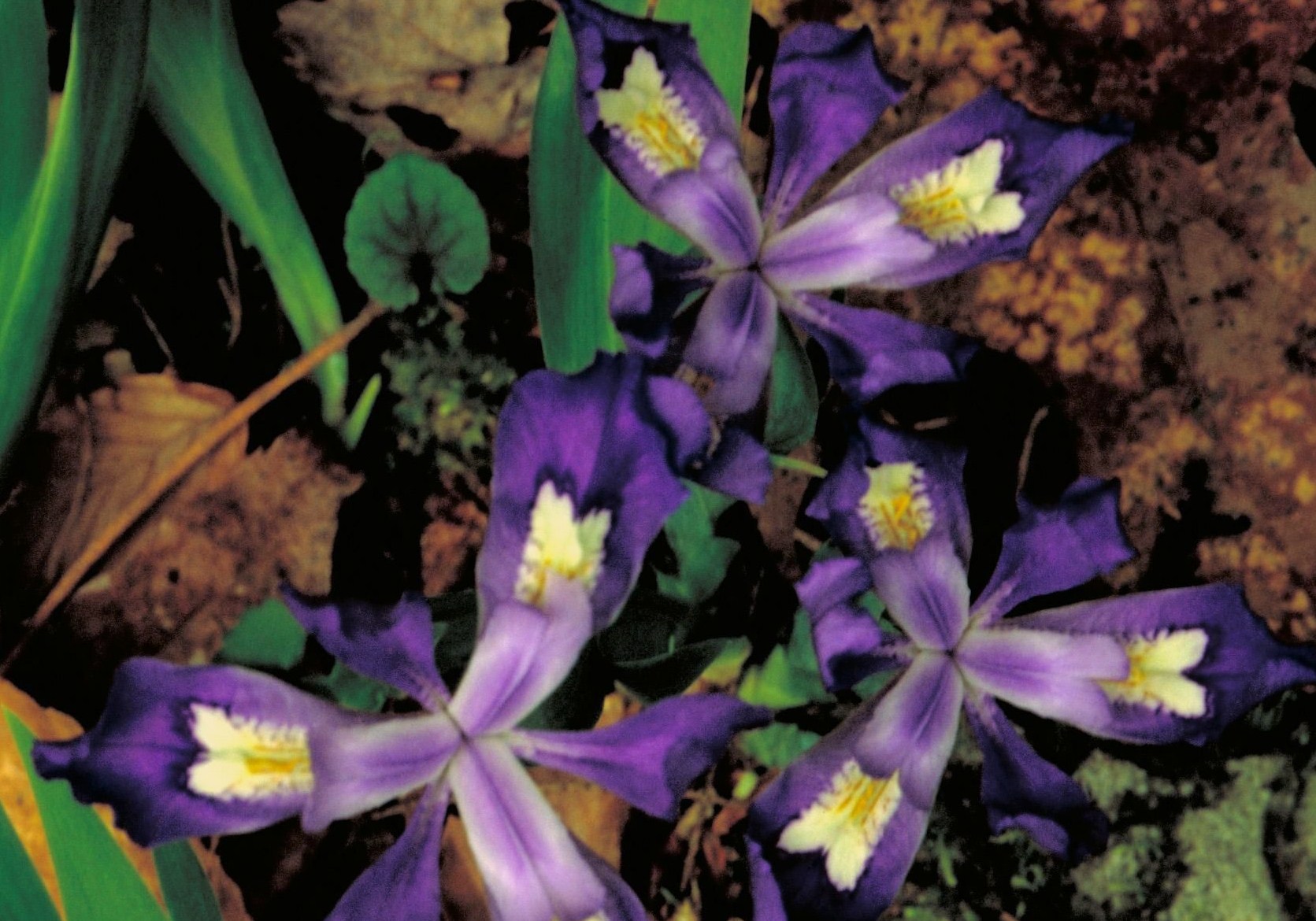
    Dwarf-crested iris, cristrata
    (stock photo)

    This poem comes from 2002 and rings even more true today than ten years ago.  This is not about remorse, self-pity or even ageing, but rather the soothing power and joy that the natural world can provide, at least temporarily, if a person is so incline to make an effort to see the wonders that exist.

  • My Fortieth Year…3:47 A.M.

    There were footsteps outside my door last night;

    loose gravel crunched, there was a catch in a gait.

    Something stood squinting in the darkness

    checking a number or matching a date.

    My heart ran rampant, throbbing, pumping dread;

    an emptying slash…..now a cavernous hollow.

    Opened now……anti-being knows my smell;

    when will it beckon for me to follow?

    I was actually 40 before I seriously considered and accepted the concept of mortality.  I awoke in the middle of the night with the most horrid feeling which haunted me for days.  This poem was an effort many, many years  ago to put words to it.  This feeling initiated the clichéd “mid-life crisis” which I quickly and completely recovered from…I’m now content, accepting and at ease.

  • Babies in Bottles

    Lured to the streets of a lay-over city,

    a place foreign to my soul, a mob

    of askant stares, titillated expectancy,

    shrill hawking of flesh and wares,

    and placards enticing, promising all;

    I walked halls narrowed by sideshow trite:

    latex attempts at grotesquerie, cast horrors,

    a two-headed this and a five legged that,

    the longest, thinnest, the nastiest things.

    Quickly contrite, I sought an out-door,

    but down-cast eyes led me astray into

    the dim, sad light of a smaller corridor.

    Each bottle hovered in its own alcove.

    Suspended by and washed by, so slow,

    a stainless, sterile sluice, a gentle sate,

    each “malfeasant of nature” each

    “quirk of fate” slept in its own forever.

    Each baby was lite for affect and show:

    a stunted webbed limb, a bulbous head,

    a truncated body without appendage,

    a Cyclops, a hermaphrodite, a Hydra;

    each a double handful of sorrow for show.

    By what were these unions frowned upon:

    a gene glitch run rampant, toxicosis,

    a gods punishment, or mans violence?

    A cause cries for blame for through

    the particled sate a delicate eyelid,

    a perfect toe, alludes to original joy,

    though fleeting, of a life proposed

    but not realized or ordained, but taken.

    Who or what along the blade of existence

    nixed this one or that one or that?

    What were their sins condemning them

    to naked display with stitched scars

    of exploration visible to see along

    the palest of blood freed flesh?

    And, where were their souls? Were they

    those vague entities of phosphorescent

    sheen locked in jars;…..fireflies

    snatched from night’s vitrine, stuffed

    beneath blankets in trunks in darken rooms?

    The phrases, “malfesasant of nature” and “quirk of fate” were taken from a poem by Robert Penn Warren.  I can not locate my copy of his collected works to give the poems title.  The origin of the idea is somewhat vague in my memory, but I believe it came from reading somewhere, several years ago, that some museum or commercial enterprise had put on a public display of deformed fetuses for whatever reason I can’t remember.  Needless to say, this bit of information affected me profoundly as I have worked on this poem over several years.  It is time to let it go.

  • The Visitation

    I held my father’s hand once more last night, but only in a dream. 

    I did not see his face or hear his voice or recognize a nod, but his

    ever-gentleness stood to sooth the unease of muddled senses.


    Almost thirty quick years have gone since I stood by his bed.

    Did I, at first, hold his hand? A white cloth, folded in half,

    lay over his mouth for moisture; rare tears traced crow’s-feet

    to his pillow and I, new to dying, wondered if he cried from fear. 

    But through the muffling wetness, struggling not to sob,

    “Your mother…”  And then I understood, “I will take care of her.”

    I promised; only then…I remember, now…did I take his hand.


    The hand I held last night was not that of thirty years before;

    his hands, in life, had the square bluntness of his days of labor.

    Always, he carried a pocketknife to turn the grease and grit

    from beneath his nails into minute, curled strings of grime.

    The hand I held in my dream was only his because I knew

    and not recognition by touch; the hand I held was feminine,

    covered with the sheltered, thin skin of one needing protection.


    I’ve pondered the paradox for days, wondering why the hand

    was his, but not; time could not have altered to such extreme,

    a touch etched in memory.  Believing only in our faulty minds,

    I can only conclude that I, so desiring that my father

    might know I have kept my promise, conjured a dream,

    a visitation; the hand I knew as his is my mother’s I hold today.

    This is new, written over a couple of days and based on a real dream.  I tend to overwork things until I have removed any sense of freshness and spontaneity which they might have contained, so, I’m trying to work on that. Only within the last couple of years have I experienced dreams about real people.  This is new for me; aging not only changes our bodies but our perceptions and, apparently, our subconscious musings.

  • Eves’ Lament

    Seth, your father always has me to blame,

    perhaps, rightly so.  We both were weak,

    but I was bolder; more easily snared

    by honeyed words and glittering eyes.


    Given no chance to reflect or repent,

    we were abruptly yanked from naiveté.

    The embittering truth of our sullen days

    crushed us to chaff, dry as this hot wind.


    “The woman whom thou gavest to be

    with me, she gave me of the tree, and

    I did eat.” Your father played the dutiful son,

    accusing me cruelly. I was no better.


    The other bore my blame; he with

    the most beautiful skin of enameled

    green hues and eyes so fearless

    in their un-blinking expectations of me.


    Your brothers are forever lost to you.

    Both had fallen before you were born;

    Cain still flees his brothers blood

    that seeps and whispers from this ground.


    A child myself, born grown, no nurture,

    no mothers’ touch and love;

    I felt no kin to Father, man, nor beast.

    I was that beetle, Seth, you toy with your stick.


    Regret and blame, they rule your father’s days.

    The other tree, if I had eaten of it instead;

    Eternal Life and then Knowledge?

    No.  It was better this way.

    The inspiration for this came from the story of the expulsion of Adam and Eve from the Garden of Eden taken from Genesis in the Bible.  Would we prefer ignorant bliss or sorrowful knowledge if the choice was ours to make?  This poem stands as I left it in August 2002.

  • The TV

     A frame, a portal box to view the past,

     reruns of the slow years entice:

    a clown, fake feet, in rags of gray and grime

    ascended a ladder tipped against

    a wire strung taut across the stage that night;

    a deft, stealth cat move and the ladder flipped.

    The clown entangled with ladder and wire

    was hung to dry…to fain ineptitude….

    his look of bewilderment held for laughs.


    I was a watcher struck by time, amazed

    by memory more clear than that of today’s,

    Ed Sullivan…. Live….the early sixties.

    I had watched his act, probably smiled

    my same quick smile, and lived fifty fast years

    never thinking of it again and now,

    a clowns’ skill, his perfected art, saddens,

    begs of fifty years of imperfecting:

    why are our looks of puzzlement the same?

  • Delight in knowing

    There’s a simple delight in knowing

    a grackle in flight by the tilt of his tail

    or an iambic line by its sweet flow.

    There’s simple delight in knowing

    how to string and break beans or

    that a child can’t feign affection.

    There’s simple delight in knowing

    that its ciphering itself that counts

    and not the sum of the equation.